 Tower Lifts
 Tower Lifts

Different Types of Service Lifts
A Technical Comparison of Service Lift Configurations
Specifying a service lift requires the balancing of load capacity, shaft dimensions, and usage frequency. While “service lift” is a broad umbrella term, there are many different types of service lifts, such as trolley lift, a dumbwaiter, and a heavy-goods lift. Get the specification wrong and you risk installation delays or a system that doesn’t meet Building Regulations.
This is where Tower Lifts comes in. For over a decade, we have designed and installed bespoke vertical transport for a range of challenging environments – from heritage listed buildings to high-pressure retail environments. We know from experience that the “right” lift isn’t just about lifting power – it’s about how that lift integrates with your building’s architecture and your team’s daily flow.
Service Lifts – Space and Structural Requirements
When we work with clients, the first thing we look at is the available footprint. Different lifts have vastly different structural demands. Here is how they compare structurally:
- Dumbwaiters – These have the smallest footprint. Because the loading hatch is usually at waist height, they usually don’t require a pit at the bottom of the shaft. This makes them the easiest to retrofit into existing buildings with minimal disruption.
- Trolley Lifts – These require a small pit (usually around 100mm) to allow the lift car to sit flush with the floor. However, they are often supplied with a self-supporting structure, meaning you don’t necessarily need a reinforced concrete shaft – a huge plus for older buildings.
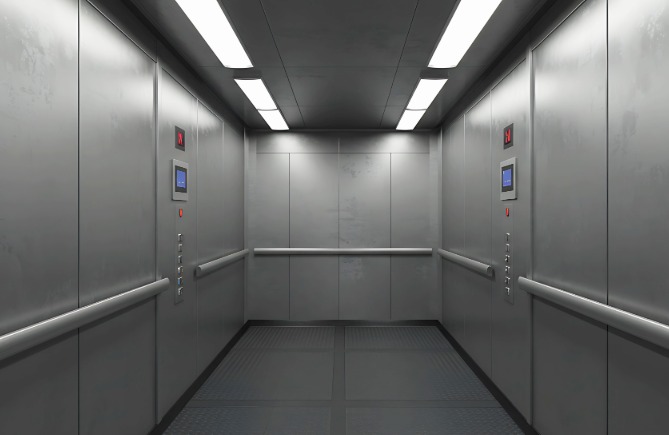
- Goods Lifts – Due to the heavy loads (up to several tonnes), these lifts require a deeper pit and significant headroom at the top of the shaft for the machinery. They usually require a dedicated, load-bearing shaft to handle the forces exerted during operation.
Installation FAQs – What Does My Building Need?
Tower Lifts will always be upfront about the structural work required when installing different types of service lifts. No matter whether you require a 50kg dumbwaiter or a 500kg trolley lift, these are the three essential technical questions:
It depends on the model you choose. For a heavy goods lift, you might need a substantial pit of 1000mm+. However, for the majority of the trolley lifts we install, a shallow pit of just 100mm is sufficient to achieve flush floor loading. If you can’t dig at all, we can usually provide a ramp option.
Usually not. Service lift design has moved away from the necessity of bulky motor rooms. Most of the lifts Tower Lifts supplies are self-contained, with the drive system located inside the shaft structure or at the top of the guides. This saves you floor space and reduces the “headroom” required on the top floor.
If you are installing a high-capacity goods lift, then yes, you will need a 3-phase (415V) supply. For smaller dumbwaiters and light-duty platform lifts, though, a standard single-phase (240V) supply is often perfectly adequate. We will take a look at your existing electrical infrastructure when we make our initial site visit.
What If a Standard Lift Doesn’t Fit My Building?
This is a challenge we encounter regularly at Tower Lifts. You know you need to move 1,000kg pallets of stock, but your available shaft space is 100mm too narrow for a “standard” goods lift. Or perhaps you are in a listed building where you can’t reinforce the walls.
We don’t just install – we design too
At Tower Lifts, we specialise in bespoke vertical transport. If you don’t have the specifications, we create them. We can custom-build lift cars to maximise every inch of your available width, or design self-supporting structures that remove the strain from your building’s fabric.
A note on regulations
Every bespoke lift we design is fully compliant with UK Building Regulations and the Essential Health and Safety Requirements of the Machinery Directive. We ensure that your new system is safe, legal, and ready for its first LOLER inspection right after handover.
Take The Guesswork Out of Your Lift Installation
Choosing the right service lift involves balancing load capacity, building constraints, and safety regulations. Crucially, it’s not something you need to do on your own. Whatever the type of service lift you require, our team can guide you from the initial sketch through to handover.
Why trust Tower Lifts?
Our operations are governed by a quality framework certified to ISO 9001:2015, ensuring you get reliable service from the moment you contact us. On-site, we protect your people and your property by strictly adhering to ISO 45001 health and safety standards. Our status as a LEIA member and a Constructionline Gold approved supplier is your guarantee that we are committed to engineering excellence.
Next Step – Book your Site Survey
Unsure if you have the right pit depth or headroom? Let us check for you. Contact the Tower Lifts team today to arrange a no-obligation site survey and let’s get your goods moving – 1525 601099
Tower Lifts London lift team can design and install a varied range of lifts throughout the UK including:
Domestic Lifts • Food Lifts • Bespoke Platform Lifts • Service Lifts • Platform Lifts • Goods Lifts • Scenic Lifts • Heavy Duty / Car Lifts • Passenger Lifts • Dumbwaiter Lifts • MRL Lifts • Fire lifts • Residential Lifts • low-Headroom Lifts